Guides
Fleet and rideshare work for a mobile car detailing business
See how a mobile car detailing business can price fleet work, set contract terms, invoice, schedule crews, and plan around Atlanta and Nashville demand.
What to take away
- Rental branches buy turnaround, rideshare drivers buy a clean cabin before the next shift, and tourism operators buy a presentable van at pickup. None of them buy your retail package.
- Quote per vehicle by class, bill one invoice a month, and set a floor from fuel, water, chemicals, labor and drive time before you sign anything.
- Atlanta corporate rental accounts run net 30. Nashville tourism and rideshare accounts usually run net 15 because their revenue comes in weekly.
- Overnight and airport-deck slots are the rideshare window. Daytime slots belong to tourism fleets between trips.
- Keep fleet revenue on its own line so you can see which channel actually pays after the route is driven.
What each fleet type actually buys
A rental branch measures one thing: how long a car sits before it goes back on the lot. A rideshare driver measures whether the cabin is clean before the next shift starts. A tourism operator measures whether the shuttle looks presentable when the first passenger walks up.
That is not a retail package. It is a repeatable result: vacuum, wipe down, glass, light stain removal, deodorizing pass. Make it easy to buy with three menu items: Fleet Turnaround (vacuum, wipe down, glass and light stain removal), Rideshare Cabin Reset (vacuum, wipe down, glass and deodorizing), and Shuttle Refresh (interior and exterior upkeep). Keep pet hair, smoke, heavy stains and biohazard cleanup as separately priced add-ons. Ceramic coating and paint correction rarely survive a fleet budget conversation.
Rental accounts usually work from a fixed menu by vehicle class. Economy cars get a basic interior and exterior. SUVs and vans get a higher rate. Pet hair, smoke and damage bill as add-ons.
Rideshare scheduling is the tightest of the three. Your prospects are individual Uber and Lyft drivers; do not assume the platforms themselves are the contracting customer. Drivers drop cars overnight or between shifts, so your window is often 10 p.m. to 6 a.m., and airport and hotel parking decks become the work site. Potential hotel prospects include Atlanta Airport Marriott and Hilton Nashville Downtown, but get written property permission before setting up.
Tourism demand in Nashville follows the calendar rather than the week. CMA Fest, bachelorette weekends and graduation season fill shuttle and party bus calendars, and operators want every seat clean before the next booking. Prospecting examples include Gray Line Tennessee and Old Town Trolley Tours of Nashville.
If you are still building that pipeline, the habits that win more mobile detailing customers apply to fleet managers too: show up on time, document the work, follow up.
Contract terms worth putting in writing
Put scope, rate and cancellation terms in writing before the first car. A service agreement that names both businesses, the services and the billing cycle is the minimum.
Attach a rate sheet as an exhibit. You can then raise prices without rewriting the agreement, which matters when fuel and chemical costs move.
Set a minimum monthly volume or a standby fee. A fleet that calls twice a month does not justify a dedicated slot, and a monthly minimum keeps the route worth driving.
Define vehicle condition standards and photograph pre-existing damage, pet hair and biohazards before you start. That record decides who pays for what later.
Cap your liability in writing: mechanical issues, electronics, and damage from worn trim or upholstery are not yours.
Require 24-hour cancellation notice. A no-show van at a hotel deck costs you the slot and the fuel to reach it.
If you chase government or set-aside work, review SBA business certifications and whether your business qualifies as small. Programs to evaluate include the 8(a) Business Development Program, the Women-Owned Small Business Federal Contract Program, the HUBZone Program, and the Veteran Small Business Certification Program (VetCert).
Invoicing and payment terms in each city
Fleet detailing invoices monthly, not per car. One invoice, one line per vehicle, with date, service and rate. Attach photos for any add-on charge.
Net 30 is the Atlanta standard for corporate rental accounts. Nashville operators often pay net 15 because their own revenue arrives weekly. Ask which cycle they run before you quote a rate.
Large rental groups route invoices through a corporate accounts payable portal. Small operators pay by card or ACH. Set up both before the first invoice goes out.
Keep every invoice, receipt and mileage log. The IRS small business recordkeeping rules apply to commercial accounts exactly as they apply to retail work.
A sole proprietor reports fleet revenue on Schedule C alongside retail work. Track the two channels separately, or you will not know which one pays.
Charge a late fee of 1.5 percent per month, put it in the contract, and enforce it once. Fleets pay faster when the fee is real.
Invoicing and payment terms
Retail customer
- Billing
- At pickup
- Terms
- Due now
- Scheduling
- Customer picks
- Volume
- One car
- Rate
- Menu price
- Payment
- Card or cash
Fleet account
- Billing
- Monthly invoice
- Terms
- Net 15 to net 30
- Scheduling
- You get a window
- Volume
- 10 to 100 cars
- Rate
- Volume rate
- Payment
- ACH, card, portal
Scheduling around turnaround and tourism peaks
Fleet work lives or dies on turnaround. A dirty rental car is a car not earning, so build the route around their lot rather than your convenience.
Run overnight blocks for rideshare and airport fleets. Give daytime slots to tourism operators between trips, and let retail fill the gaps.
Use a two-person crew for vans and shuttles: one on interiors, one on exteriors. A shuttle that takes 90 minutes alone takes about 40 with two.
Block recurring slots in your calendar. Tuesday and Thursday nights for one rental branch, Saturday mornings for a tourism fleet. Predictable slots cut drive time and fuel.
If scheduling keeps slipping, the operations and workflow guide covers how to sequence jobs without gaps.
Track on-time completion, average minutes per vehicle and rework rate. Those are the KPIs owners should track once fleet volume grows.
Atlanta licensing and where you can work
Atlanta requires a business license, and depending on your setup, zoning approval for where you park and operate. Confirm current requirements with the City of Atlanta planning department before signing a fleet contract.
Working on private property, such as a rental lot or a hotel deck, generally needs the property owner's written permission. Put that permission in the contract rather than in a text message.
Wash water is the second issue. Runoff into storm drains falls under Clean Water Act rules, and local pretreatment requirements vary by municipality. For Atlanta, ask the Department of Watershed Management about wash-water handling at your proposed discharge point. Confirm what the site allows before you set up on a lot.
Keep your license, insurance certificate and a signed service agreement in the truck. Fleet managers ask for them during audits, usually with no notice.
Nashville seasonality and how to plan around it
Nashville tourism runs on events. CMA Fest in June, bachelorette weekends year round and the December holiday rush each push shuttle, party bus and rental demand.
Tourism fleet detailing peaks from March through October. Winter is slower, which makes those months the right time to sign contracts and train crews.
Rideshare drivers work downtown and near the airport. Offer a mobile slot at a hotel or parking deck and you remove their most common excuse for skipping a clean.
Rental work near the airport is steady but price sensitive. Tourism fleets pay more for presentation but book in bursts, so you need both on the calendar. For Nashville airport-area prospects, identify operators at the Nashville International Airport rental car facility and confirm where they authorize detailing work.
Build a seasonal plan: lock tourism accounts in February, rental accounts in January, rideshare accounts any time of year.
For Nashville work, contact the Davidson County Clerk about the applicable Tennessee business tax license and Metro Codes Department about zoning or land-use approval for your operating address. Before washing on site, ask Metro Water Services' Stormwater Division about wash-water handling and discharge rules.
Pricing fleet accounts against retail packages
Retail prices per car from a menu. Fleet prices per car at a volume rate. The difference is the margin you trade for consistency and route density.
A retail full interior and exterior in these metros commonly runs 150 to 250 dollars. A fleet rate for similar work lands nearer 60 to 100 dollars per vehicle, depending on class and volume. Treat those as illustrative and check your own market.
Do not discount below cost per car. Add fuel, water, chemicals, labor and drive time, then set the floor from that total.
Use a quote template with pricing examples to show fleet managers how the rate breaks down. Transparency closes contracts faster than a lower number does.
Charge add-ons separately: pet hair, smoke, biohazard and heavy stain removal. That is where fleet work stays profitable.
Review rates every six months. Fuel and chemical costs move, and a rate signed two years ago may no longer cover the route.
Crews, equipment and a worked example
One detailer can hold a small rental branch. Two or three branches need a crew and a van stocked for volume.
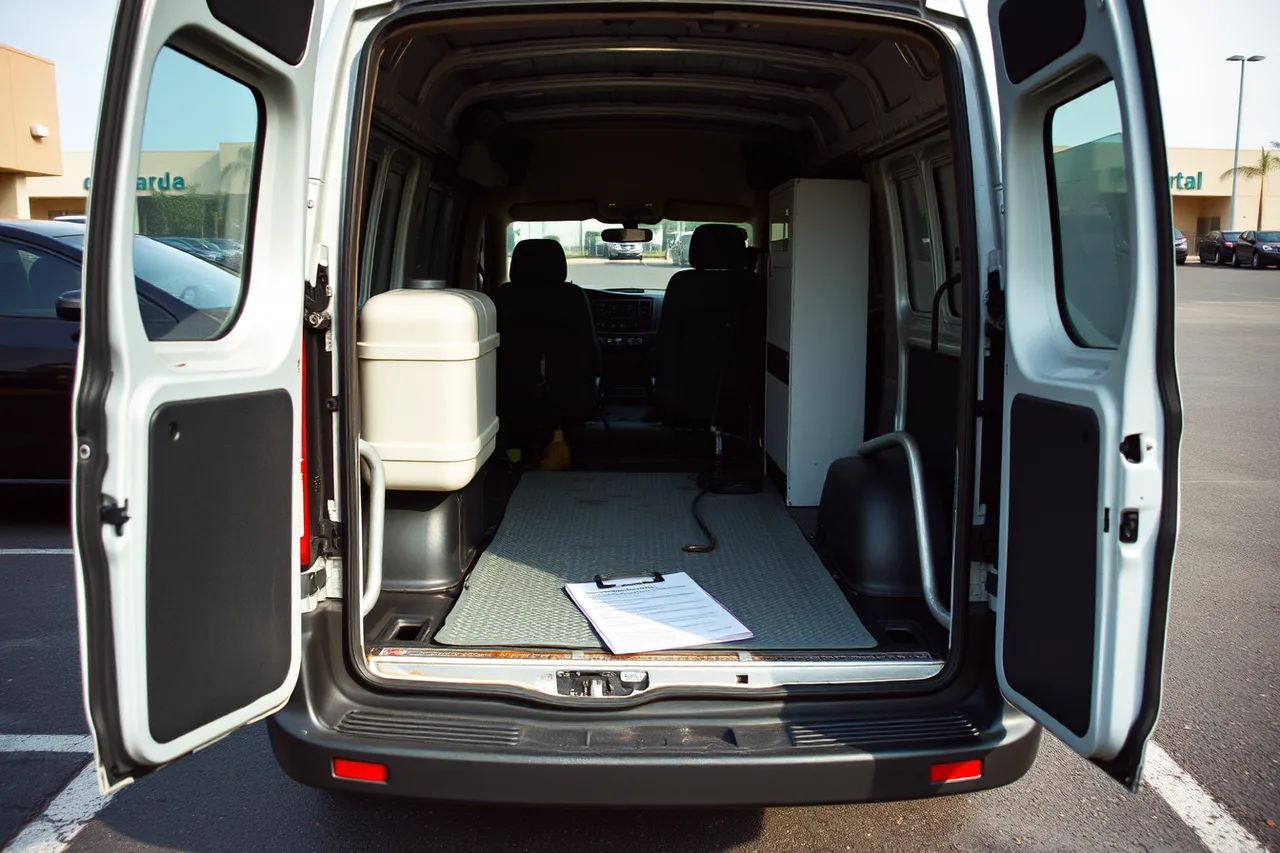
Standardize the kit: one vacuum per crew, a water tank, a generator, microfiber in bulk, and a chemical set that works on cloth and vinyl. Fewer SKUs mean faster restocking.
Hire part-time help for overnight blocks. Pay per vehicle or per shift, and train them on your checklist before they touch a fleet car.
Worked example, with your own numbers substituted: a two-person crew detailing 40 cars at 80 dollars per car bills 3,200 dollars for the night. Chemicals and fuel run about 300 dollars. Labor at 25 dollars per hour across 16 combined hours runs 400 dollars. That leaves roughly 2,500 dollars before overhead, insurance and vehicle costs.
Add a second crew only when the first is booked five nights a week. Hire too early and you carry payroll without the volume to cover it.
Common questions
How do I find fleet contracts in Atlanta?
At ATL, start with Enterprise, Hertz, Avis and Budget at the ATL Rental Car Center. Ask for the branch manager rather than the front desk, and bring a one-page rate sheet; also contact hotel shuttle operators directly.
Do Nashville rideshare fleets pay differently than rental fleets?
Yes. Rideshare drivers usually pay per car at pickup or through an app, while rental and tourism fleets pay on a monthly invoice with net terms. Budget for the cash-flow gap that monthly terms create.
What payment terms should I ask for?
Start with net 15 for small operators and net 30 for corporate rental accounts. Add a 1.5 percent monthly late fee and enforce it once so the term means something.
Do I need a special license for fleet detailing in Atlanta?
You need a general business license and, in some cases, zoning approval for your operating location. Confirm the current requirements with the city before you sign a fleet contract, and keep proof in the truck.