Guides
How to Price Ceramic Coating Packages for Mobile Detailing
Mobile detailing ceramic coating packages need line-item pricing for paint correction, coating product, and labor. Daily driver and show car ranges guide quotes.
What to take away
- Ceramic coating packages in mobile detailing typically run from $400 to $1,800 for daily drivers and $1,500 to $4,500 for show cars, with all ranges illustrative.
- The invoice should separate paint correction, coating product, application labor, and prep work.
- Three cost drivers move the price mostpaint condition before coating, vehicle size, and local road or climate conditions.
- Quotes that hide prep or aftercare costs often cause disputes later.
- Charge for the coating's warranty and aftercare support only when you can actually deliver them.
A ceramic coating package is not a wash and wax upgrade. It is a paint correction service with a bonded polymer layer on top. Most coating bottles cost under $150. The package price covers four to ten hours of prep labor. Customers pay for the result, not the liquid.
How ceramic coating packages earn their price
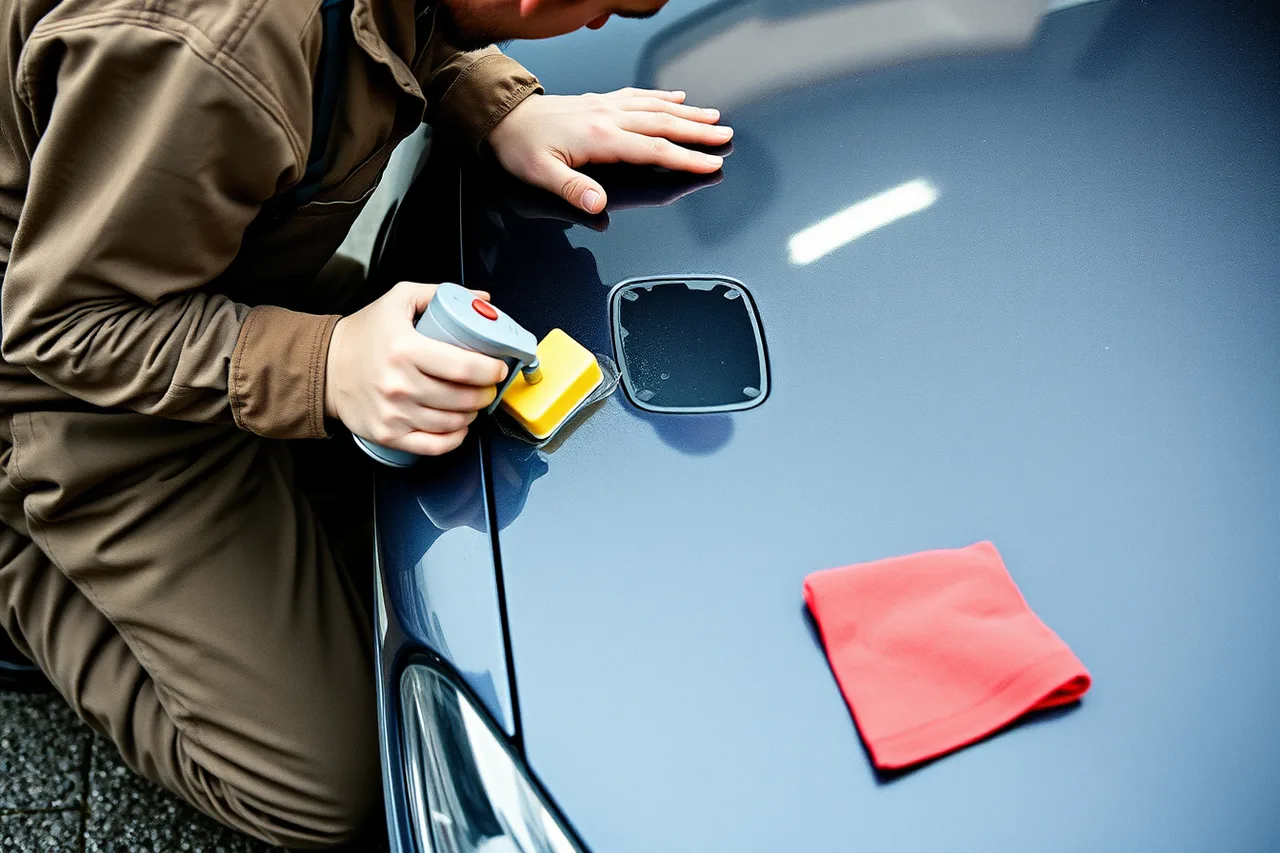
Auto detailing before coating includes chemical decontamination, clay bar, and machine polishing. A mobile detailer must first remove swirls and oxidation so the coating has a clean surface. If the paint is not corrected, the coating locks in defects. This is why a $900 package is normal for a daily driver.
Before adding ceramic coating, check which add-ons belong on your Mobile Detailing Menu. Coatings sell better after wheel-off cleaning, glass coating, or trim restoration. The package should not compete with a basic wash. It should replace the customer's waxing habit with a longer protection layer.
Line item pricing ranges
The table below shows illustrative line items for a mobile ceramic coating package. Low and high ranges reflect vehicle size, paint condition, and market.
| Package line item | Low range (USD) | High range (USD) | What changes it |
|---|---|---|---|
| Wash and chemical decontamination | $60 | $150 | Vehicle size, dirt level |
| Clay bar and iron removal | $40 | $120 | Rail dust or salt exposure |
| One-step paint correction | $150 | $350 | Paint hardness, defect count |
| Coating product and application | $120 | $400 | Coating brand, number of layers |
| Final inspection and curing support | $0 | $150 | Warranty registration, aftercare kit |
A daily driver package usually lands between $400 and $1,200 when one-step correction is enough. A show car package with multi-stage correction can reach $1,800 to $4,500. These ranges are illustrative, not a national benchmark.
Three cost drivers detailers often miss
Price a coating package by the condition of the paint, not the make and model alone.
- Paint hardness and defect depth. Soft black paint corrects faster than hard German clear coat, but it also shows holograms more easily. This changes hours and price.
- Vehicle size and body lines. A Ford F-150 crew cab has more flat panels than a Mazda MX-5, but the truck also has more edges to tape and polish.
- Local road and climate conditions. Salt, iron from rail yards, or coastal moisture increase decontamination time and the number of coating layers you recommend.
In humid coastal markets, Miami salt air changes prep needs and coating cure times. The detailer should add a decon step and allow for longer flash time between coats.
What quotes leave out
The most common pricing mistake is hiding paint correction inside the coating charge. When the client asks why a bottle costs $50 but the package is $900, the hidden labor becomes a trust problem.
A quote should show the wash and decontamination line separately. It should show the coating product, the application labor, and any warranty registration. If you bundle everything into one number, you cannot defend the price.
A clear quote follows the same structure in this mobile detailing business quote guide. The line items above should appear on every estimate, even if the client only asks for a total. Some clients ask for a single total. You can give them that total, but keep the line items in your own file. If they later question the price, the breakdown is your defense.
State tax and wash-water compliance
State and local tax rules affect the final price a customer sees. A mobile detailer should check the sales tax rate in each city they serve before quoting. Some states exempt labor but tax materials. Others tax the whole service.
Selling a coating package may be taxable in many states. Some states tax detailing labor and products together. Check your state's department of revenue before you quote a final price.
If your prep wash releases water to a storm drain, check your local MS4 permit. The EPA stormwater program regulates municipal storm sewer discharges. This compliance cost should sit as a small overhead line, not as a surprise fee.
Example quote for a daily driver versus a show car
The numbers below are illustrative.
Daily driver sedan: wash and decon $110, one-step correction $250, coating product and application $220, final inspection $50. Total $630.
Show car coupe: wash and decon $180, two-step correction $600, coating product and application $450, final inspection and curing support $150. Total $1,380.
Use these totals to test whether your labor rate covers the hours. If the show car takes ten hours and you charge $1,380, you are at $138 per hour before product and overhead.
Where overspending hides
Many detailers overspend on coating brands before they have enough correction skill. A $250 professional coating does not fix a poor prep job. Buy the coating that matches your training and your local conditions. CarPro Cquartz, Gtechniq Crystal Serum Light, and Ceramic Pro 9H are common starting points, not guaranteed upsells.
Do not buy a $2,000 infrared curing lamp until you have ten coating jobs booked per month. A mobile detailer can cure most coatings in a garage or with ambient temperatures. Wait to add equipment after the package revenue is steady.
Sales tax on ceramic coating packages varies by state. If you work in California, follow the CDTFA sales tax rules for packages. This avoids undercharging a taxable service.