Guides
9 points on mobile detailing hiring and training that matter
Hiring and training for a detailing van: designing the role, testing for the right traits, and a sign-off ladder that stops damage before it reaches a customer.
What to take away
- A detailing technician works unsupervised at a stranger's home with expensive chemicals near a customer's paint. Select for conscientiousness before skill.
- Skill can be taught in weeks. Care, punctuality and the willingness to say something went wrong cannot.
- A sign-off ladder is the whole training systemnobody touches a machine or a customer vehicle until they have been observed doing it.
- Write the role before advertising it, including travel time, weather exposure and physical demands, because misunderstanding those is why people leave in month two.
- Employment rules on classification, wages and travel time are set by law, not by custom. Confirm them with the responsible agencies.
Design the role before advertising it
Most bad hires in this trade come from an advertisement that described a job nobody was actually offering.
Write down, honestly:
- The physical realitykneeling, reaching, lifting, heat, cold, wet.
- The travelhow many stops, how much driving, whether the person drives the van.
- The autonomyhow much of the day is unsupervised at a customer's property.
- The variabilityweather cancellations, and what that means for hours and pay.
- The progressionwhat the person can be doing in a year, and what has to be true for that.
Then decide which of those are fixed and which you would change to attract a better candidate. Some operations discover the answer is a route redesign rather than a wage increase.
What to select for
| Trait | Why it matters here | How to observe it |
|---|---|---|
| Conscientiousness | Unsupervised work at a customer's home | Work sample, and whether they clean up after it |
| Honesty about mistakes | A concealed scratch becomes a claim | Ask about a time something went wrong and listen for the concealment |
| Tolerance for repetition | Maintenance work is the same job many times | Ask what they did in their least interesting previous job |
| Physical steadiness | Long days, awkward positions | The work sample, not a claim |
| Customer manner | The technician is the whole company to that customer | Watch them explain something to a stranger |
Product knowledge is not on that list deliberately. It is the easiest thing to teach and the least predictive of how someone works.
What to Select For
Trait
- Conscientiousness
- Unsupervised work at customer's home
- Honesty about mistakes
- Concealed scratch becomes a claim
- Tolerance for repetition
- Maintenance work is same job many times
- Physical steadiness
- Long days, awkward positions
- Customer manner
- Technician is the whole company
Why It Matters
- Conscientiousness
- Work sample, cleanup after
- Honesty about mistakes
- Ask about a time something went wrong
- Tolerance for repetition
- Ask about least interesting previous job
- Physical steadiness
- The work sample, not a claim
- Customer manner
- Watch them explain to a stranger
How to Observe
- Conscientiousness
- Honesty about mistakes
- Tolerance for repetition
- Physical steadiness
- Customer manner
Sourcing candidates
Referrals from current staff and from customers are the strongest source in this trade, followed by people already doing physical service work who want fewer hours in a building. Detailing enthusiasts are a mixed source: enthusiasm is real, but a hobbyist's standard of two hours per panel is not a business standard, and the conversion takes patience.
Whatever the source, the selection process has to be applied the same way to everyone. The EEOC's material for small business employers sets out the obligations around how applicants are treated and what may be asked, and reading it before writing an advertisement is a great deal cheaper than reading it afterward.
The work sample
Run a paid work sample rather than a long interview. A half day on a real vehicle, with you present, tells you more than any set of questions.
Watch three things: whether they follow the order they were given, whether they ask when unsure, and what the workspace looks like when they finish. Skill level barely matters at this stage. Someone who asks before improvising is the person you want with a polisher near a customer's paint.
Employment obligations, before the first shift
Classification, minimum wage, overtime and recordkeeping are legal matters, not preferences. The Department of Labor's Wage and Hour Division publishes compliance assistance for new and small businesses covering these areas.
Two questions are specific to mobile work and worth asking directly rather than assuming. How is travel time between job sites treated? And does providing their own tools make someone a contractor? The second answer is usually no on its own, and getting it wrong is expensive.
Workers compensation obligations and their thresholds are set locally and belong with the rest of the questions in the licensing and compliance guide.
The sign-off ladder
This is the training system. It replaces the idea that someone has been trained with a record of what they have been observed doing.
The Sign-Off Ladder
- Level 1Passenger observes, carries, touches no customer vehicle
- Level 2Supervised interior, signed off after defined vehicles pass
- Level 3Supervised exterior wash, two-bucket discipline observed
- Level 4Unsupervised maintenance work, inspection rate stays high
- Level 5Decontamination and protection, chemical handling, dwell times
- Level 6Machine correction, only for people steady at level 5
Level 1: Passenger. Observes, carries, learns the route, learns where everything lives in the van. Touches no customer vehicle.
Level 2: Supervised interior. Vacuum, wipe-down, glass, under observation. Signed off when a defined number of vehicles pass inspection.
Level 3: Supervised exterior wash. Wheels, wash, dry. This is where paint damage begins, so the wash technique and the two-bucket discipline are demonstrated and then observed, not explained and assumed.
Level 4: Unsupervised maintenance work. The technician can run a maintenance package alone. Inspection rate stays high for a defined period.
Level 5: Decontamination and protection. Chemical handling, dwell times, panel temperature.
Level 6: Machine correction. Last, and only for people who have been steady at level 5. A polisher in untrained hands is the most expensive tool in the van.
Each level is a dated signature by the person who observed it. That record is what tells you whether a defect is a training gap or a lapse, and it is also what an insurer will ask about after an incident.
What has to be taught that is not technique
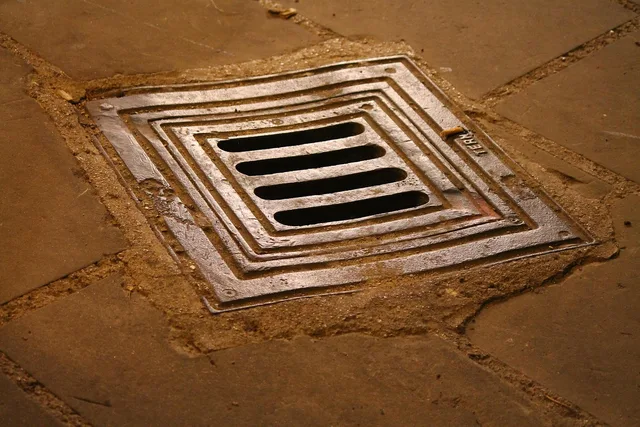
- Wash water handling. Runoff carries hydrocarbons, brake dust and metals, which is why the EPA's fact sheet on best practices for vehicle maintenance and washing treats it as a pollutant source. A technician has to know what never goes down a drain and what to do when a site makes containment impossible.
- Chemical safety, dilution and labeling, including why decanting into an unlabeled bottle is not allowed.
- The condition record and why photographs are taken before anything is touched.
- The worse-than-described conversation, rehearsed until it can be said calmly.
- The running order for each package, which comes from the operations and workflow guide.
- What each package includes and excludes, from the services and packages guide, because the technician is the person the customer asks.
Paying people, and the cost of paying them
Wage setting is a local question and no figure belongs on this page. What helps is a reference point: occupational wage estimates by industry, state and metropolitan area are published in the Bureau of Labor Statistics employment and wage tables, which is one input among several when reviewing local compensation.
The number that matters to the business is loaded cost, not wage: wage plus payroll taxes, insurance, equipment, phone, training time and non-productive hours. That figure is what belongs in the pricing derivation in the pricing and profit guide, and getting it wrong is why some operations grow into a loss.
Keeping people
Turnover in physical service work is high, and the causes are consistent: unpredictable hours, a route that wastes their day, equipment that fights them, and no visible next step.
Three fixes cost little. Give reliable hours or be honest that you cannot. Fix the equipment complaint they raised, which is usually right and is part of the build described in the equipment and setup guide. And publish the sign-off ladder so progression is a thing that can be earned rather than hoped for.
Where you hire from is also a territory question. A route that keeps technicians driving for half the day is a retention problem as much as a margin one, which loops back to the territory reasoning in the startup and market overview.
Common questions
Should the first hire be experienced?
Not necessarily. An inexperienced person trained into your standard often outperforms an experienced one carrying habits from a high-volume wash operation.
Is piece rate a good idea in detailing?
It rewards speed in a trade where speed causes paint damage. If used at all, it needs a quality gate attached, and the wage and hour rules that apply to it need checking first.
How long until a new technician is productive?
Through level 4 usually takes weeks rather than days, but the honest answer depends on your service mix. Correction work takes months of supervised practice.
What is the most common hiring mistake?
Advertising a role that does not describe the driving, the weather or the physical demands, and then losing the person in month two.