
Guides
Mobile detailing startup: demand, competition and the opening plan
Mobile detailing startup planning: size local demand, pick a service model, work within water and power limits, and set what the first season must prove.
What to take away
- A mobile detailer sells access to the customer's driveway as much as paint correction, and the driveway sets most of the limits.
- Water, power, drive time and daylight are the four physical constraints that decide which jobs are possible in a territory.
- Local demand can be read from vehicle density, parking type and employer concentration before any money is committed.
- The service model, whether solo van, two-technician crew or fleet contract work, changes the equipment list more than it changes the price list.
- The first season exists to prove one thingthat a full day of booked work finishes without a return visit.
What the business actually sells
A fixed shop sells a bay. A mobile detailer sells the removal of a trip. That difference decides almost everything downstream, because the customer buys back an hour of their own day.
They judge the work partly on whether the visit was invisible: no puddle on the drive, no cord across the sidewalk, no noise that brings a neighbor out.
Work must be finished in one visit, at a site the operator does not control, in whatever weather that morning brings.
The operator absorbs every minute the customer no longer spends. Drive time, setup, teardown and the walk-around come out of the job, not a bay rental.
Write the offer as a promise about the visit, not as a list of chemicals. A customer who understands what will happen in their driveway between arrival and handover has no reason to ask for a discount on a step they cannot see.
The four constraints that decide a territory
Everything a mobile unit can do is bounded by what it can carry and what it can plug into.
Mobile unit constraints
Water
- Hard limit
- Tank gallons
- Common failure
- Storm drain
- Workaround
- Rinseless method
- Local check
- Stormwater authority
Power
- Hard limit
- Outlet current
- Common failure
- Tripped breaker
- Workaround
- Generator or battery
- Local check
- Site power agreement
Drive time
- Hard limit
- Unbillable minutes
- Common failure
- River crossing
- Workaround
- Tight territory
- Local check
- Map stop spacing
Daylight/weather
- Hard limit
- Inspection light
- Common failure
- Rain on exterior
- Workaround
- Mixed route
- Local check
- Seasonal peak
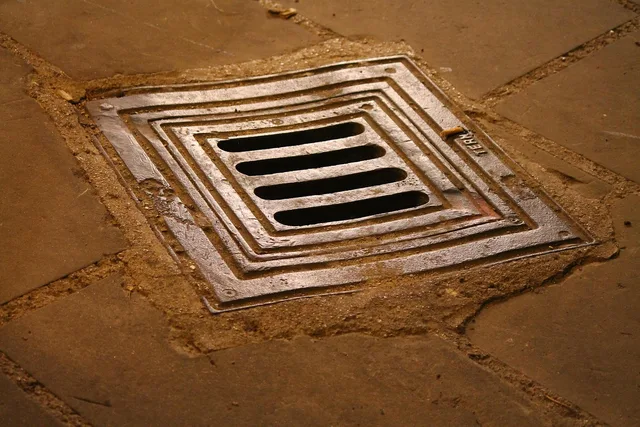
Water. A tank is a hard budget. Every gallon spent on a pre-rinse is unavailable for the next vehicle, and refilling mid-route is unpaid time. Rinseless and low-water methods exist for this reason. Wash water also has to go somewhere, and letting it run into a storm drain is the most common way a new operator creates a problem. Wash water falls under the Clean Water Act's stormwater permitting program, which the EPA runs through state environmental agencies under NPDES permits, and many cities go further and require the water to be contained and discharged to the sanitary sewer rather than a storm drain. The local stormwater authority, usually the city or county stormwater office, sets what applies in a specific territory, so ask that office before the first job, not after a complaint.
Power. An extractor, a heater and a polisher do not draw the same current, and a customer's exterior outlet is rarely a safe assumption. The realistic options are a generator, a battery bank with an inverter, or a written agreement to use shore power. Each has a noise and weight cost, and noise is what gets a van asked to leave an apartment complex.
Drive time. Unbillable minutes between stops are the largest hidden cost in the model. A territory that looks generous on a map can be unworkable if the stops sit on opposite sides of a river crossing.
Daylight and weather. Correction work needs light to inspect. Interior work does not. A route built entirely on exterior jobs loses whole days to rain in a way a mixed route does not.
Reading local demand before spending money
No national number tells anyone whether a territory will support a detailing van, and any figure presented that way should be ignored. What can be read locally, without buying anything:
Read local demand
- Vehicle density and parking type
- Vehicle age and condition mix
- Employer and fleet concentration
- Competing supplyfixed vs mobile
- Seasonality and peak timing
- Write who first hundred customers are
Reading local demand
- Vehicle density and parking type. Detached housing with private driveways is workable. Structured parking, permit-only streets and apartment complexes with posted washing restrictions are not, or not without a site agreement.
- Vehicle age and condition mix. Newer vehicles pull maintenance washes and coating work. Older and harder-used vehicles pull interior restoration, which is less weather dependent and less price sensitive.
- Employer and fleet concentration. Dealerships, rental branches, service contractors with liveried vans, and any business whose vehicles carry its name are all recurring rather than one-off buyers.
- Competing supply. Count the fixed washes and the mobile operators separately. They do not compete for the same job.
- Seasonality. Road salt, pollen, coastal salt air and long dry dusty seasons each create a different peak, and the peak decides when cash is tight.
The readings are local because the data behind them is local, and it costs nothing. Registered-vehicle counts come from the state motor vehicle agency, which publishes registrations by county or ZIP code. Housing type, owner occupancy and household vehicle availability come from the American Community Survey published by the US Census Bureau. Commercial and fleet vehicles show up in state registrations and, for interstate carriers, in the public carrier records kept by the Federal Motor Carrier Safety Administration. Together they narrow a territory down before a van is bought.
Turn those five readings into a single written statement of who the first hundred customers are expected to be. If that statement cannot be written, the territory has not been studied yet.
Reading the competition
Count the supply the way a customer would find it, then keep the two kinds of competitor apart.
- Search Google Maps and Yelp from the center of the territory using the phrases a customer would use: mobile detailing, mobile car wash, car detailing near me, ceramic coating. Draw one drive-time radius from the van's base and count only what sits inside it.
- List fixed washes and detail shops separately from mobile operators. A tunnel wash, a hand-wash bay or a production shop competes for the customer who wants cheap and convenient; a mobile operator competes for the customer who will not drive anywhere.
- For every mobile operator, record four thingsservices advertised, whether prices are posted, how recent the reviews are, and how wide a radius is claimed. An operator with no recent reviews and a radius covering three counties is not really in the territory.
- Check the public records that show who is genuinely operating: the city or county business license list, state sales-tax permit registrations where they are public, and local zoning or planning records for fixed wash sites.
- Price the same three jobs, an express interior, a full interior and exterior, and a paint correction, against the nearest competitors that offer them, and note where the comparison breaks down: vehicle condition, travel distance and how much of the work happens in the customer's driveway.
Choosing a service model
The model is a decision about who the buyer is. It is easier to change the price list later than to change this.
Choose a service model
Solo residential
- Buyer
- Individual owners
- Demands
- Booking discipline
- Breaks at
- One illness
- Settles
- Weather flexibility
Two-technician crew
- Buyer
- Same-day households
- Demands
- Training and tools
- Breaks at
- Undertrained rework
- Settles
- Second wage bill
Fleet and commercial
- Buyer
- Business fleets
- Demands
- Invoicing and insurance
- Breaks at
- Stretched payment terms
- Settles
- Volume throughput
Coating specialist
- Buyer
- Enthusiast owners
- Demands
- Controlled conditions
- Breaks at
- Driveway conditions
- Settles
- Lighting and time
Buyer
- Solo residential
- Individual vehicle owners
- Two-technician crew
- Households wanting a same-day full service
- Fleet and commercial
- Businesses with liveried or pooled vehicles
- Coating and correction specialist
- Owners of newer or enthusiast vehicles
What it demands
- Solo residential
- Booking discipline, a clean van presentation, weather flexibility
- Two-technician crew
- Training, a second set of tools, a wage bill before the second van pays
- Fleet and commercial
- Invoicing terms, insurance evidence, scheduled site access
- Coating and correction specialist
- Controlled conditions, longer bookings, demonstrable skill
Where it breaks
- Solo residential
- One illness stops all revenue
- Two-technician crew
- Undertrained second pair of hands shows up as rework
- Fleet and commercial
- Payment terms stretch cash while work is already done
- Coating and correction specialist
- A driveway rarely offers the conditions the work needs
Most operators end up mixing two of these. The point of naming a primary model is that it settles the equipment argument: a fleet-first operator needs volume throughput and invoicing, and a correction specialist needs lighting and time.
Setting up the entity and the records
Registration, tax treatment and recordkeeping depend on jurisdiction, but the sequence is short and the offices are named. A limited liability company is formed by filing articles of organization with the state Secretary of State. The federal employer identification number is requested from the IRS on Form SS-4. A sales-tax permit comes from the state department of revenue where detailing is a taxable service, and a general business license comes from the city or county where the van is based. Fee amounts and taxability vary by state, so confirm the current forms with those offices or a local accountant.
The IRS page on starting a business covers federal registration and the choices that follow from entity type. The SBA's ten-part business guide walks the planning and funding sequence for a new operation. Both are starting points for questions to put to a local accountant, not substitutes.
Insurance is a separate decision from registration, and the coverages are not interchangeable. A mobile operator is normally asked for commercial auto coverage on the van and the travel between jobs, general liability for injury or property damage at the customer's address, and garage keepers coverage for customer vehicles in the operator's care, custody and control. Because the work happens on property the operator does not own, ask the agent to confirm in writing that on-site work and water damage are covered, and to list the additional insureds that fleet and property-management customers will request.
Set up the books before the first job rather than after the first tax notice. A detailing operation generates a lot of small chemical and fuel receipts, and reconstructing them a year later is a genuine loss of money.
The opening plan, in order
The steps build on each other, and the order carries more weight than the speed.
- Write the statement of who the first hundred customers are expected to be, from the five readings, and pick one primary service model. Nothing is bought before that statement exists.
- Form the entity, then get the employer identification number, the state sales-tax permit if the state taxes detailing, and the city or county business license. Registration comes before the first invoice.
- Bind the insurance before the first paid jobcommercial auto, general liability, and garage keepers coverage for customer vehicles in the operator's care.
- Ask the local stormwater authority, or the state environmental agency that runs the NPDES program, what containment and disposal the territory requires, and settle how wash water leaves the site.
- Get written quotes for the van fit-out, tank, power source, extractor and polisher, then buy in the order the chosen model's own bookings demand rather than all at once.
- Set the price list so that a full day of the primary job covers drive time, on-site time, chemical cost and the fixed monthly costs, including the insurance premium and the van payment.
- Book the first jobs inside a single drive-time radius and close together, and start tracking the four first-season numbers on the first day of work.
- Hold marketing spend until a booked day finishes on time, at the promised standard, without a return visit.
What the first season has to prove
A new operation is running an experiment, and the experiment has a pass condition. Write it down before starting.
First season pass condition
- 0Return visits
- 0Refunds
- 4Metrics tracked by hand
- 1Booked day finishes on time
The condition is not revenue. It is completion: a booked day finishes on time, at the promised standard, without a return visit and without a refund. Until that is repeatable, adding marketing spend only increases the number of customers who see the failure.
Track four things by hand if necessary: minutes on site against minutes quoted, minutes driving, rework visits, and water used per vehicle. The last one matters more than new operators expect, because it is the number that decides whether a second job can be done before a refill.
The EPA's WaterSense guidance on vehicle washing describes how fixed wash facilities measure and reclaim water by wash stage. A mobile unit has no reclaim loop, which is why the measurement has to happen at the tank.
Where year one usually goes wrong
- Buying a coating certification before the booking calendar is full. Skill without demand is inventory.
- Quoting by vehicle size only, ignoring condition. A neglected interior is a different job from a maintained one of the same size.
- Treating drive time as free.
- Accepting fleet work at residential prices because the volume looks attractive.
- Running the business out of a personal account, then trying to separate it later.
Common questions
Is there a market size figure for mobile detailing in my area?
Not one that can be trusted from a page like this. National estimates are built for investors and do not survive contact with a specific zip code. Build the estimate yourself from parking type, vehicle mix and fleet concentration, which are all observable.
How much should I plan to charge?
No responsible number can be given here, because pricing follows local wage rates, drive distances and the condition mix of the vehicles in a territory. Set it from the bottom instead: time the drive into the territory, time each stage on site, add the chemical and water cost per vehicle, and divide a realistic working day by the number of jobs it actually holds. That gives the hourly rate the schedule has to earn before any discount makes sense. For the labor input, wage estimates by occupation and metropolitan area are published in the Occupational Employment and Wage Statistics tables from the Bureau of Labor Statistics, which is one honest input among several.
Do I need a fixed location eventually?
Only if the work demands conditions a driveway cannot give, which in practice means multi-stage correction and coating cures. Plenty of operations stay mobile permanently and add a small storage and supply unit instead of a customer-facing shop.
What is the most common reason a new mobile detailer stops?
Cash timing rather than demand. Equipment is bought up front, commercial customers pay on terms, and the gap between those two is where operations run out of room.