Guides
How to Price RV Detailing Packages for Mobile Business
Mobile detailing RV packages cost $150 for a basic exterior wash up to $1,200 or more for full paint correction. Size, travel and oxidation drive the price.
What to take away
- A basic exterior RV wash and rinse typically lands between $150 and $350 for a 25 to 30 foot Class C, while a full interior and exterior package runs $450 to $900.
- Paint correction and ceramic coating on a motorhome push invoices past $1,200, and a 40 foot diesel pusher can clear $2,500 because surface area roughly doubles.
- Travel distance is the quiet cost driver. Sun Belt operators in Arizona, Texas and Florida often quote a trip fee outside a 25 mile radius.
- Oxidation, roof condition and slide-out count decide whether a quote holds or grows once you arrive.
- The invoice line items below are what customers actually pay for, not a menu of extras.
What the range covers
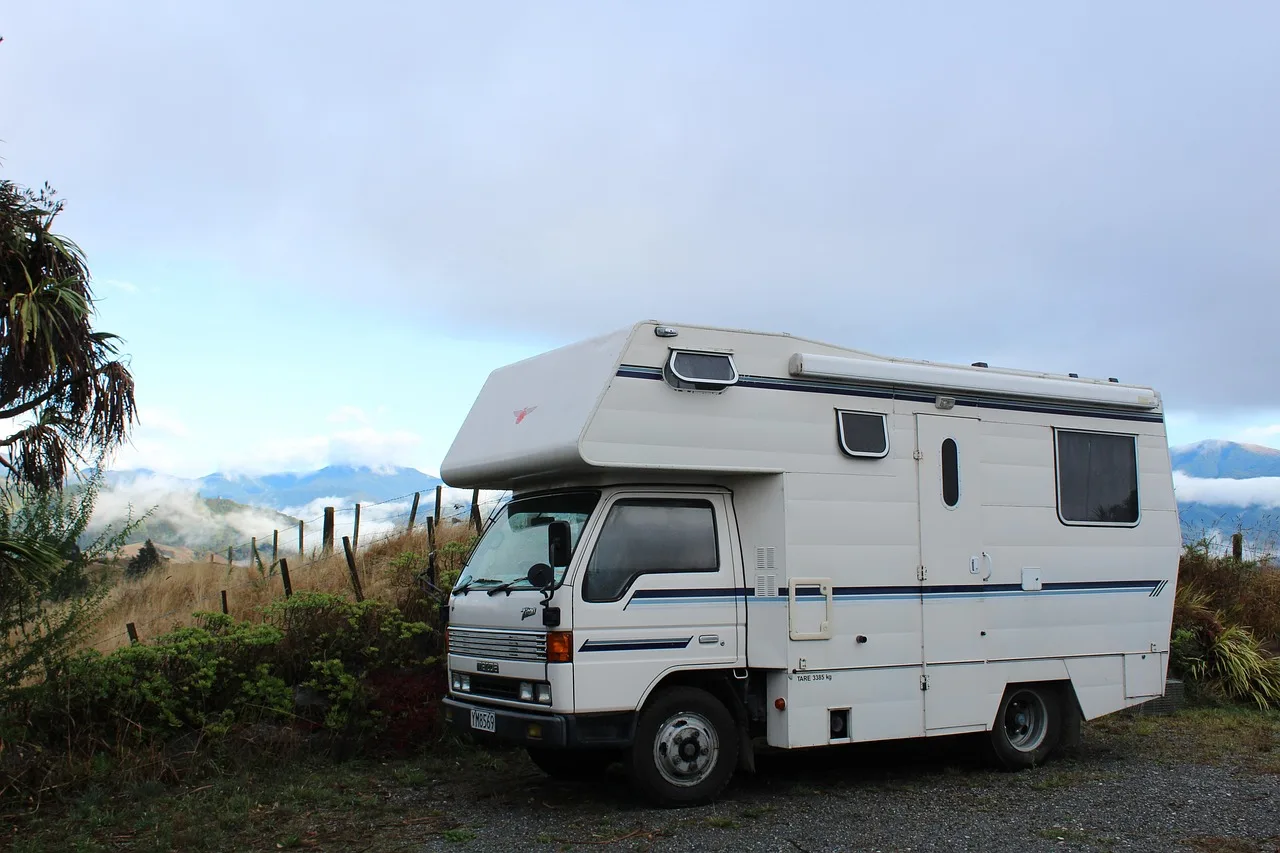
RV detailing is not a scaled-up car wash. A 30 foot travel trailer carries roughly 600 to 900 square feet of exterior surface once you count the roof, awning, ladder, wheels and underbody. That is three to four times a full-size pickup.
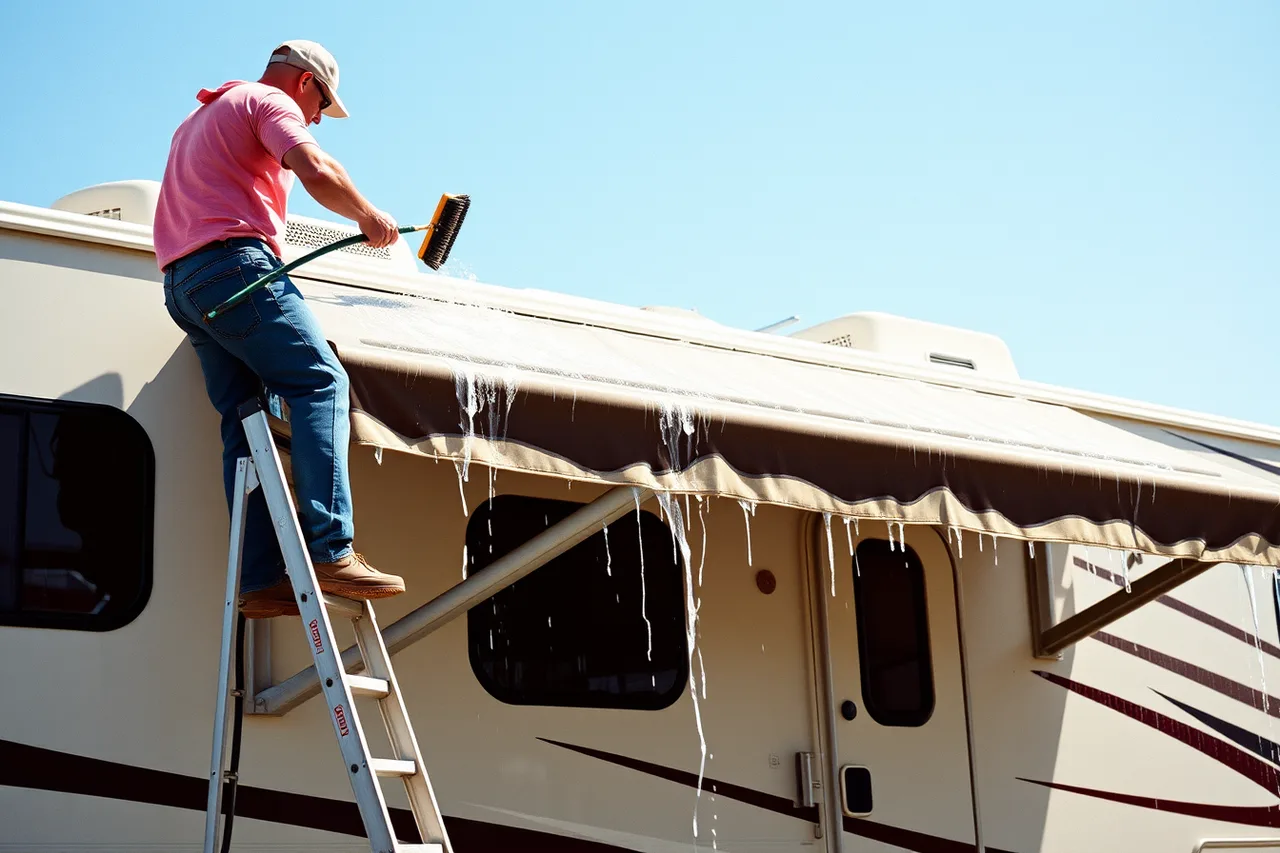
A recreational vehicle also has systems a car does not: roof membrane, slide seals, holding tank compartments, awnings and often a fiberglass shell that has baked in the sun for years. The Wikipedia entry on recreational vehicles notes the wide range of classes and sizes, which is exactly why pricing must be tiered rather than flat.
Because RVs sit outdoors and travel, the work overlaps with preventive maintenance thinking. Buyers are not paying for shine alone. They are paying to slow gelcoat chalk, seal failure and roof damage.
Line by line
The table below shows illustrative US pricing for a 28 to 32 foot Class C in average condition. Treat the numbers as ranges, not quotes.
| Line item | Low | High |
|---|---|---|
| Exterior hand wash, roof included | $150 | $300 |
| Wheels, tires, undercarriage rinse | $40 | $90 |
| Awning and slide-out cleaning | $30 | $75 |
| Interior vacuum, wipe-down, glass | $90 | $220 |
| Oxidation removal and one-step polish | $200 | $600 |
| Sealant or spray ceramic | $120 | $350 |
| Holding tank and compartment detail | $50 | $120 |
| Trip fee outside 25 miles | $0 | $150 |
A straightforward wash and interior package therefore sits near $310 to $685. Add correction and coating and the same rig reaches $1,000 or more.
- Measure the rig and count slide-outs before quoting.
- Inspect the roof and note chalk or cracks in writing.
- Photograph oxidation and any existing damage.
- Confirm water and power access at the site.
- Send the quote with the trip fee stated separately.
What moves the number
Length is the first driver. Every additional ten feet adds roughly 25 to 40 percent to labor hours, because surface area grows faster than most owners expect.
Condition is the second. A rig stored under cover in Yuma needs far less correction than one parked year-round in Phoenix sun. Chalked gelcoat can double the polishing time.
Travel is the third. Operators serving camping regions around Tucson, Austin or the Florida Panhandle drive farther between jobs than a driveway detailer in a dense suburb. That mileage shows up as a trip fee or a higher minimum.
Access matters too. A rig in a storage lot with no hose bib forces water hauling, which adds time and weight. The EPA page on stormwater discharges from municipal sources is worth reading if you plan to work in lots with drainage permits, since wash water rules shape where you can set up.
What quotes leave out
Most first quotes exclude roof treatment, which is the single most requested add-on once a customer sees the roof up close. They also leave out black streak removal on fiberglass, decal restoration and any work on a tow vehicle.
Two more gaps show up often. First, many quotes assume the customer supplies water and power. Second, they ignore disposal of wash water at sites with no drain access.
A quote that lists what is excluded protects the operator more than a low headline price ever will.
If you bundle services into tiers, the logic in product bundling applies directly: customers compare packages, not line items, and a mid tier usually sells best.
Where people overspend
Owners overspend on correction products before they have enough RV volume to justify them. A rotary polisher and a full compound lineup can run $600 to $1,200, and most jobs need one polish and one sealant.
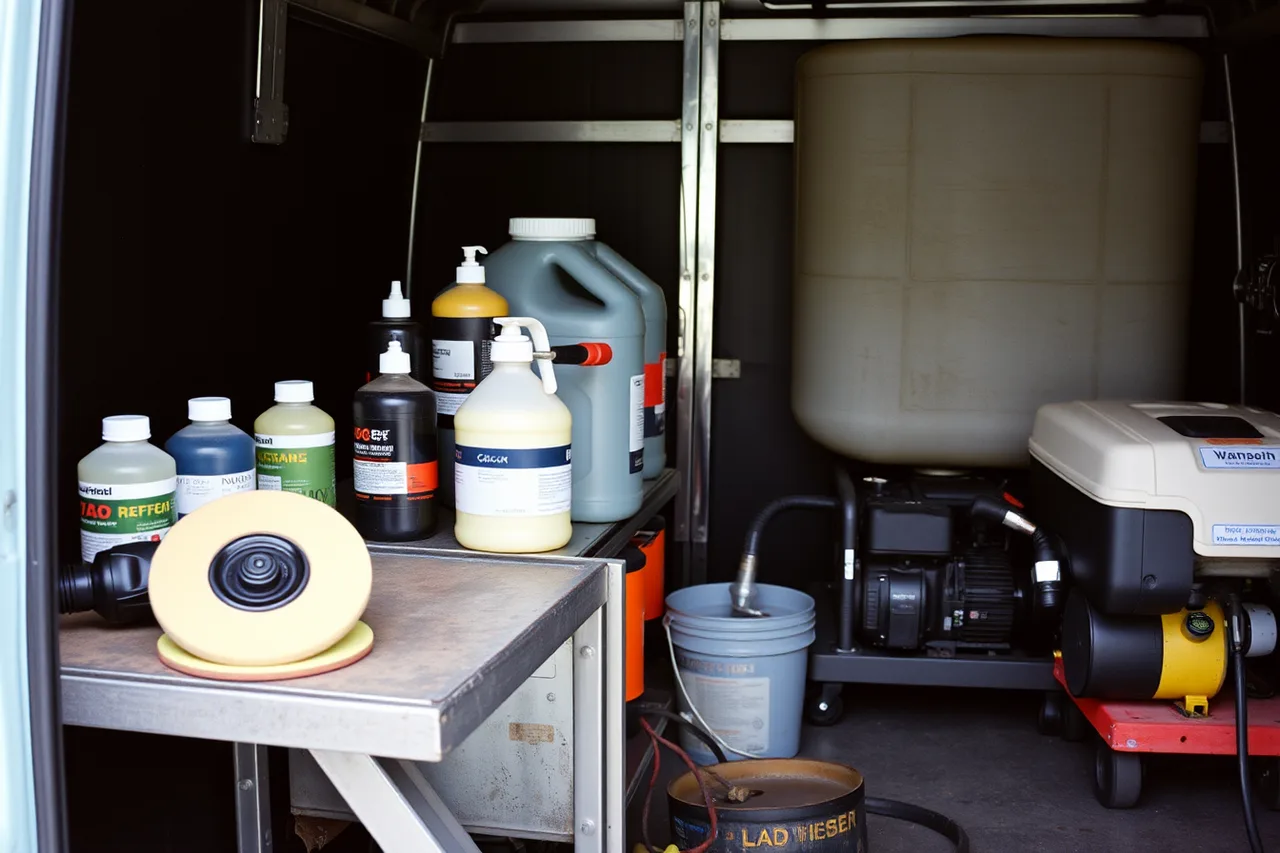
They also overspend on water tanks and generators sized for cars rather than coaches. A 100 gallon tank sounds generous until a 40 foot rig drinks it dry on the roof alone.
Finally, many undercharge rather than overspend. A $99 RV wash attracts customers who will never buy the $700 package, and it trains the market to expect car pricing on a house-sized vehicle. The pricing template in pricing a mobile detailing quote helps you build tiers that hold up on site.
For operators running a mixed fleet of cars and coaches, the tier structure in 3 pricing tiers for mobile detailing in Houston and Dallas-Fort Worth shows how to keep RV work priced separately.
Common questions
How much does RV mobile detailing cost in the US?
Why is motorhome detailing priced higher than a car?
Do mobile detailers charge a trip fee for RVs?
Can I price an RV package without seeing it?
Serving RV owners also means understanding seasonal demand, and the winter salt and storage issues covered in how Miami salt air and humidity change mobile detailing packages apply to coastal coaches year-round.