
Guides
Texas garage keepers vs general liability insurance for mobile detailers
Garage keepers pays when a customer's car is damaged in your care. General liability covers everything else. Texas detailers need both, plus commercial auto.
What to take away
- Garage keepers pays when a customer's car is damaged, stolen or vandalised while you hold the keys, including in the customer's own driveway.
- General liability pays for injuries to other people and damage to property that is not the car, such as a slip on wash water or a stripped garage door.
- Texas does not require detailers to carry either policy. The Texas Department of Insurance licenses the insurers and reviews the forms, and it takes complaints.
- A personal auto policy excludes business use, so a van carrying a water tank and generator needs commercial auto.
- Fleet and dealership accounts ask for a certificate of insurance before they release keys, and their limits usually run higher than a solo detailer's first policy.
- The most common gap is home-based work, where owners assume the customer's homeowner policy will respond. It covers the customer, not your business.
What garage keepers coverage actually protects
Garage keepers responds when a vehicle in your care, custody or control is damaged, stolen or destroyed. In the detailing trade it is the policy that stands behind the thing the customer cares about most.
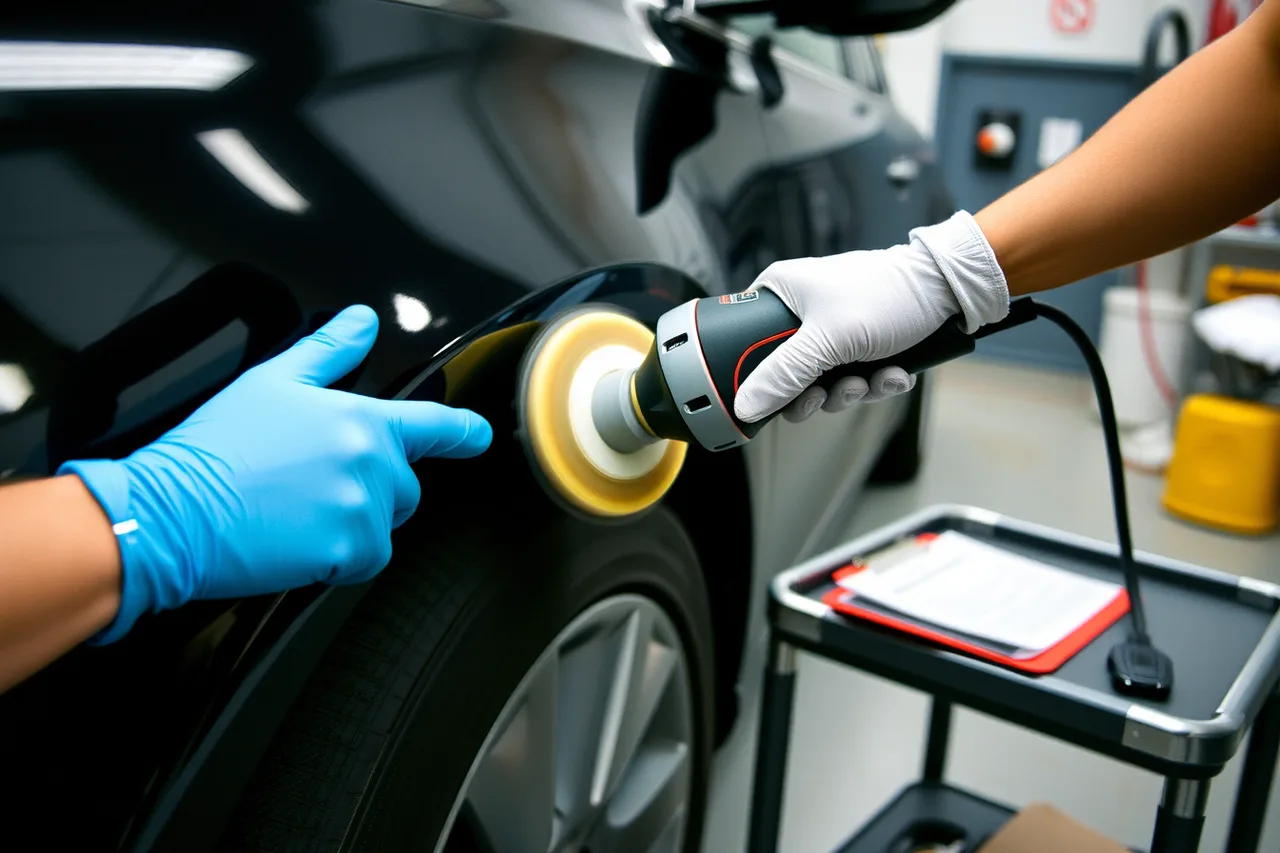
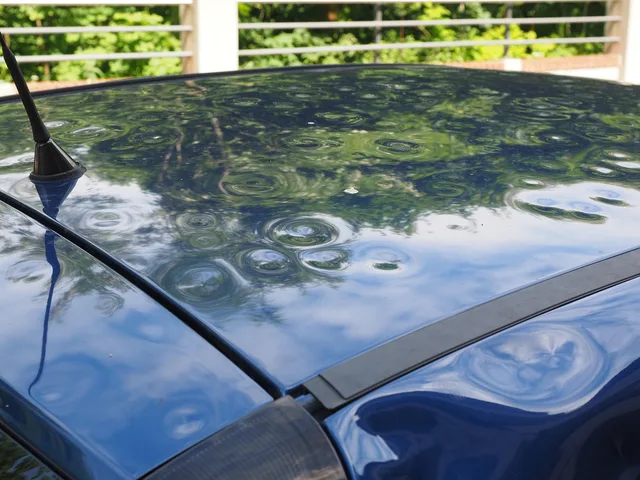
Custody starts when the keys change hands. A buffer burns through clear coat, a pressure washer forces water past a window seal, a polisher slips off a fender: each is a garage keepers claim, not a general liability claim.
Theft counts the same as damage. A car left overnight in a locked bay or a fenced lot can disappear, and without this coverage the detailer is personally exposed for the vehicle's value. Most policies also cover personal property inside the car up to a stated limit.
Two forms exist and they are priced differently. Legal liability pays only when you are legally responsible for the loss. Direct primary pays regardless of fault, which is why shops holding high-end inventory usually buy it. Ask which form is being quoted before you compare prices.
Garage keepers is also the reason to keep a written intake sheet. Photos, mileage and a signed condition report at drop-off give the adjuster something to work with when a customer claims a scratch predates your work.
How general liability responds to damage and injury claims
General liability protects you against claims from people you do not own and property you do not hold in trust. It answers a lawsuit, not a repaint.
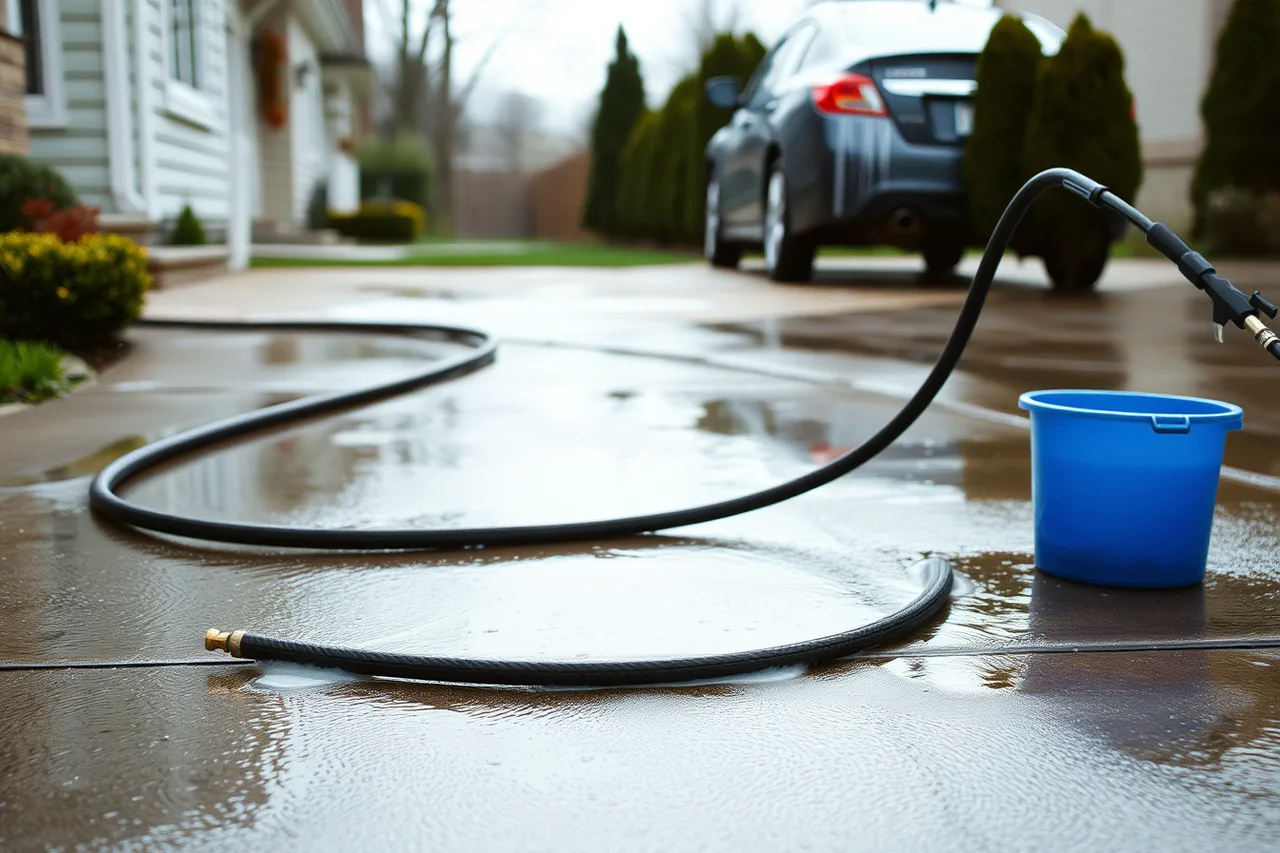
Slip and fall is the classic claim. Wash water on a driveway, a hose across a sidewalk, a bucket in a dark garage: each is a trip hazard. The policy pays medical bills and defends you if the injured person sues.
It also covers damage to a customer's property that is not the vehicle. A pressure washer that strips paint off a garage door, a chemical that stains concrete, an extension cord that burns a patch of lawn.
Completed operations coverage extends protection after you leave the job. If a coating fails months later and the customer claims property damage, the policy can still respond, subject to the wording and exclusions in your form.
General liability never pays to repair or replace a customer's car. That is the line between the two policies, and it is the most misunderstood point for new owners. A declarations page listing both coverages still treats them as separate grants.
Personal and advertising injury coverage is bundled into most general liability forms. It responds to accusations of libel, slander or copyright infringement in your marketing, which is rare in detailing but cheap to include.
What Texas actually requires of a mobile detailer
Texas does not require every mobile detailer to carry general liability or garage keepers coverage. The state regulates insurers, not detailers, on this point.
The Texas Department of Insurance licenses insurance companies and agents, reviews policy forms and handles consumer complaints. If an agent sells you terms that do not match the filed form, TDI is where you file.
What Texas does require is proof of financial responsibility for vehicles you drive. A van or truck operated on public roads must carry auto liability at the state minimum, and a commercial policy is the right tool when the vehicle serves the business.
Some cities and counties add their own conditions. A detailer working from a fixed location may need a local business license, a certificate of occupancy, or a stormwater permit for wash water that reaches a storm drain. Those local rules sit outside insurance but often appear on the same vendor application.
Water discharge is the environmental issue Texas detailers overlook most. Wash water carrying soap, oil and brake dust into a storm sewer can trigger Clean Water Act enforcement, and no liability policy pays a regulatory fine. Our licensing and compliance guide walks through the permits that sit alongside your coverage.
Premiums you pay as a sole proprietor are deductible business expenses reported on Schedule C. The Instructions for Schedule C (Form 1040) | Internal Revenue Service show where those costs go on the form.
Commercial auto and the mobile rig
A personal auto policy excludes business use. Once your van carries a water tank, a generator and a rack of chemicals, an insurer can deny a claim on the grounds that the vehicle is being used for a purpose the policy never agreed to cover.
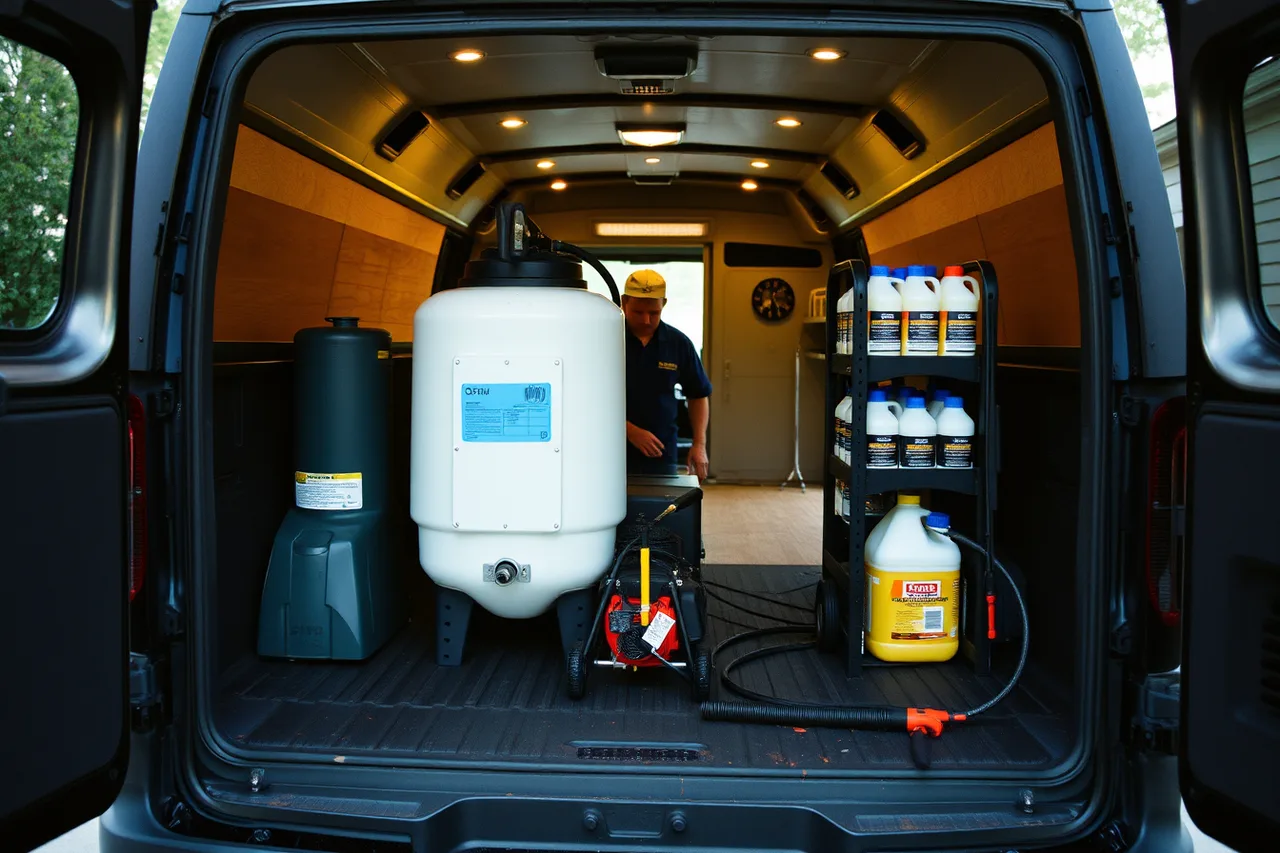
Commercial auto solves that. It covers liability for injuries and property damage you cause while driving, plus physical damage to the van itself if you buy comprehensive and collision.
Watch weight and modification rules. A half-ton van loaded with a 100-gallon tank, a pressure washer and a generator can exceed its payload rating, and some personal policies exclude vehicles modified for business. Tell the underwriter exactly what is bolted in.
Hired and non-owned auto coverage is the piece owners forget. If an employee drives their own car to pick up supplies and causes an accident, hired and non-owned responds. Without it the claim lands on the employee's personal policy and then on you.
Vehicle expenses meet your coverage at tax time. The Publication 463 (2025), Travel, Gift, and Car Expenses | Internal Revenue Service sets out the standard mileage rate and the actual expense method, and commercial premium is part of the actual expense calculation.
Keep records clean, because the Publication 334 (2025), Tax Guide for Small Business | Internal Revenue Service requires you to substantiate business vehicle use.
Comparing limits, deductibles and buyers
Premiums move with revenue, payroll, vehicle values and claims history, so treat any figure you see online as a starting point rather than a quote. The structure below is what actually differs between the two policies.
Garage keepers coverage
- What it protects
- Customer vehicles in your care, custody or control
- Typical trigger
- Damage, theft or vandalism to a customer car
- Limit structure
- Per vehicle limit plus aggregate
- Deductible
- Usually per vehicle
- Who asks for proof
- Dealerships, auctions, storage clients
- Typical buyer
- Shops and mobile detailers holding keys
General liability coverage
- What it protects
- Third parties injured, and their property
- Typical trigger
- Slip and fall, damage away from the vehicle
- Limit structure
- Per occurrence plus general aggregate
- Deductible
- Usually per claim, sometimes zero
- Who asks for proof
- Landlords, commercial accounts, cities
- Typical buyer
- Nearly every business with public contact
Limits deserve more attention than premiums. One million dollars per occurrence is the common floor for commercial accounts. Garage keepers limits are written per vehicle, so a $100,000 per vehicle limit leaves you exposed while you hold a car worth more than that.
Ask about the aggregate. A general aggregate caps total payouts for the policy year, and a detailer working several commercial properties can exhaust it faster than expected. If you hold multiple vehicles at once, price a higher per vehicle limit before you shop on price alone.
Deductibles shape cash flow more than premiums do. A $2,500 garage keepers deductible on a $4,000 paint correction claim means you pay most of it. A lower deductible costs more per month and keeps one bad job from wiping out a week of revenue.
A two-van detailer in Fort Worth carries $1 million per occurrence general liability, $100,000 per vehicle garage keepers with a $1,000 deductible, and commercial auto on both vans.
A customer's truck is scratched on a mobile job and the repair estimate is $3,200. Garage keepers pays $2,200 after the deductible.
A separate claim, a visitor who slips on wash water at a dealership, goes to general liability.
Certificates of insurance for fleet and dealership accounts
A certificate of insurance is the one-page proof that your policy exists, and fleet managers treat it as a gate. No certificate, no keys.
Dealerships and fleet accounts usually want to be named as an additional insured on your general liability policy. That endorsement protects them under your policy if they are pulled into a lawsuit over your work, and it costs little to add.
They also want a waiver of subrogation, which stops your insurer from suing them to recover what it paid. Read the contract before you agree, because some requests go beyond what your policy can support.
Certificates expire. Send a fresh one at every renewal and keep a current copy in the van and on your phone. A lapsed certificate is the fastest way to lose a dealership account you spent months winning.
Most commercial accounts ask for 30 days' notice of cancellation. That is an endorsement on your policy, not a promise an agent can make verbally, so confirm it is in the form before you sign the vendor agreement. Our compliance checklist for new owners covers the documents inspectors and fleet managers ask to see.
Gaps that appear at a customer's home
Home-based work is where coverage assumptions break down. The customer's homeowner policy covers their own liability, not your business operations on their driveway.
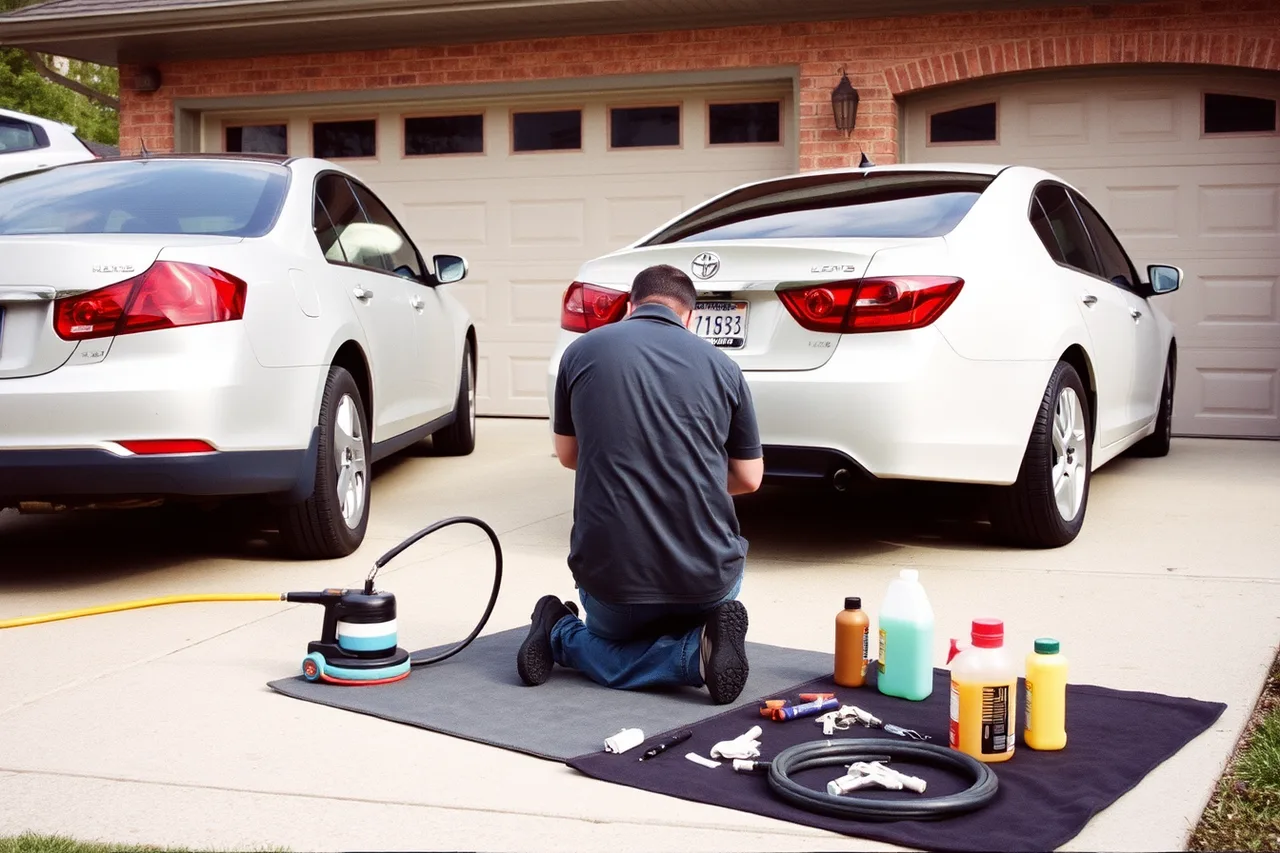
Damage to the driveway, garage door or landscaping goes to your general liability policy. Damage to the car while you hold the keys goes to garage keepers. Neither policy is triggered by the location itself, but owners often assume the homeowner's coverage will absorb the loss.
The vehicle you drive to the job is a third exposure. Commercial auto covers the drive and the parked rig, but tools and chemicals stolen from an unlocked van at a customer's home may fall outside it unless you bought tools and equipment coverage.
Working alone at a residence raises a safety question. OSHA small business standards cover hazards such as chemical handling, electrical safety and heat exposure, and the Small Business | Occupational Safety and Health Administration page explains which obligations apply to a business your size.
Insurance pays a claim after an injury; the standards are what keep the claim from happening.
Document every home job. A signed intake form, time-stamped photos, and a note of where you parked and where you discharged water give your insurer a defensible file if a claim arrives weeks later.
Choosing coverage as the business grows
The right policy changes as the business changes. A solo operator with one van and no employees has a different exposure than a three-van operation with a shop bay and two W-2 employees.
Start with commercial auto and general liability. Add garage keepers the moment you take possession of customer keys, which for most mobile detailers is day one. Workers' compensation becomes a serious question as soon as you hire, and Texas rules on it differ from most states.
Review limits at every renewal, not every few years. A detailer who starts with a $50,000 per vehicle garage keepers limit and later holds luxury vehicles is underinsured on paper and exposed in practice.
Track what you pay. Premiums, deductibles and claims all feed the numbers you use to price jobs, and our guide to insurance costs and coverage breaks down how those figures move as a business scales.
Growth changes your workflow too. More vans mean scheduling, routing and intake procedures that hold up under a claim, and the operations and workflow guide covers how to build them.
If you are still deciding whether to add the second van at all, the startup costs and funding breakdown shows what the money looks like before you commit.
A short checklist for the next renewal:
- Confirm commercial auto covers every van and lists the correct business use
- Match garage keepers per vehicle limits to the most expensive car you might hold
- Check that general liability names your key fleet accounts as additional insured
- Verify the waiver of subrogation and 30-day cancellation notice endorsements are in force
- Keep intake forms, photos and water discharge notes for every home job
- Store certificates of insurance where you can send one within an hour
Common questions
Does Texas law require mobile detailers to carry garage keepers insurance?
No. Texas does not mandate garage keepers or general liability coverage for detailing businesses. The Texas Department of Insurance regulates insurers and policy forms, while auto liability coverage is required for any vehicle driven on public roads.
Can I use my personal auto policy for my detailing van?
Usually not. Personal policies exclude business use, and a van carrying a water tank, generator and chemicals is a business vehicle. Commercial auto for the mobile detailing rig is the correct coverage.
What limit should I carry for garage keepers coverage?
Set the per vehicle limit at or above the value of the most expensive car you might hold. A $100,000 per vehicle limit is common, but dealership work with luxury inventory often calls for more.
Will general liability pay if I damage a customer's paint?
No. Damage to a vehicle in your care, custody or control is excluded from general liability and belongs to garage keepers coverage. General liability handles injuries and damage to other property.
Do fleet accounts really check my certificate of insurance?
Yes. Most dealerships and fleet managers will not release keys without a current certificate, and many require additional insured status and a waiver of subrogation before they add you as a vendor.
Are my insurance premiums tax deductible?
For a sole proprietor, ordinary and necessary insurance premiums are deductible business expenses reported on Schedule C. Keep the records that support the deduction.