Guides
What to Put in a Canadian Winter Mobile Detailing Package
Winter mobile detailing packages in Canada must work below freezing, where water freezes on contact and salt stays active. Here is what the cold rules out.
What to take away
- A winter package in Canada is built around an undercarriage rinse and a hydrophobic sealant, not a full interior strip-down.
- Water freezes on contact at roughly -5 C and below, so any package that needs a wet wash outdoors is ruled out for much of December through February.
- Salt stays active on steel above about -18 C, which is why undercarriage work matters more in January than in July.
- Pricing sits higher in CAD because of heated water, antifreeze-safe waste handling and shorter working windows.
- The workaround stops being worth it when the vehicle is already showing blistering or perforation, and a body shop takes over.
What the constraint removes
Temperature is the measurable constraint. Below about -5 C, water on cold sheet metal freezes before it runs off. Below -10 C, most rinseless and waterless products stop flashing cleanly and leave residue in door jambs and seams.
A detailer in a Saskatoon or Winnipeg driveway in January gets a working window measured in minutes, not hours.
That rules out the full exterior wash and clay treatment as a standalone winter service. It also rules out interior steam extraction on a vehicle that has sat outside, because the cabin never reaches a temperature where extraction water evaporates. A package promising a complete inside-and-out detail in an unheated driveway in February is a package that will not deliver.
Road salt is the reason the constraint bites. Salt keeps doing its work on steel at temperatures well below freezing, and the corrosion it starts does not pause when the weather warms. The mechanism is well documented in general references on road salt and corrosion, which is why winter packages lead with the underside.
What still works
A winter package can still be sold, and it can still be profitable. It just changes shape. The core is an undercarriage rinse with heated water, followed by a spray sealant that cures in cold and sheds brine.
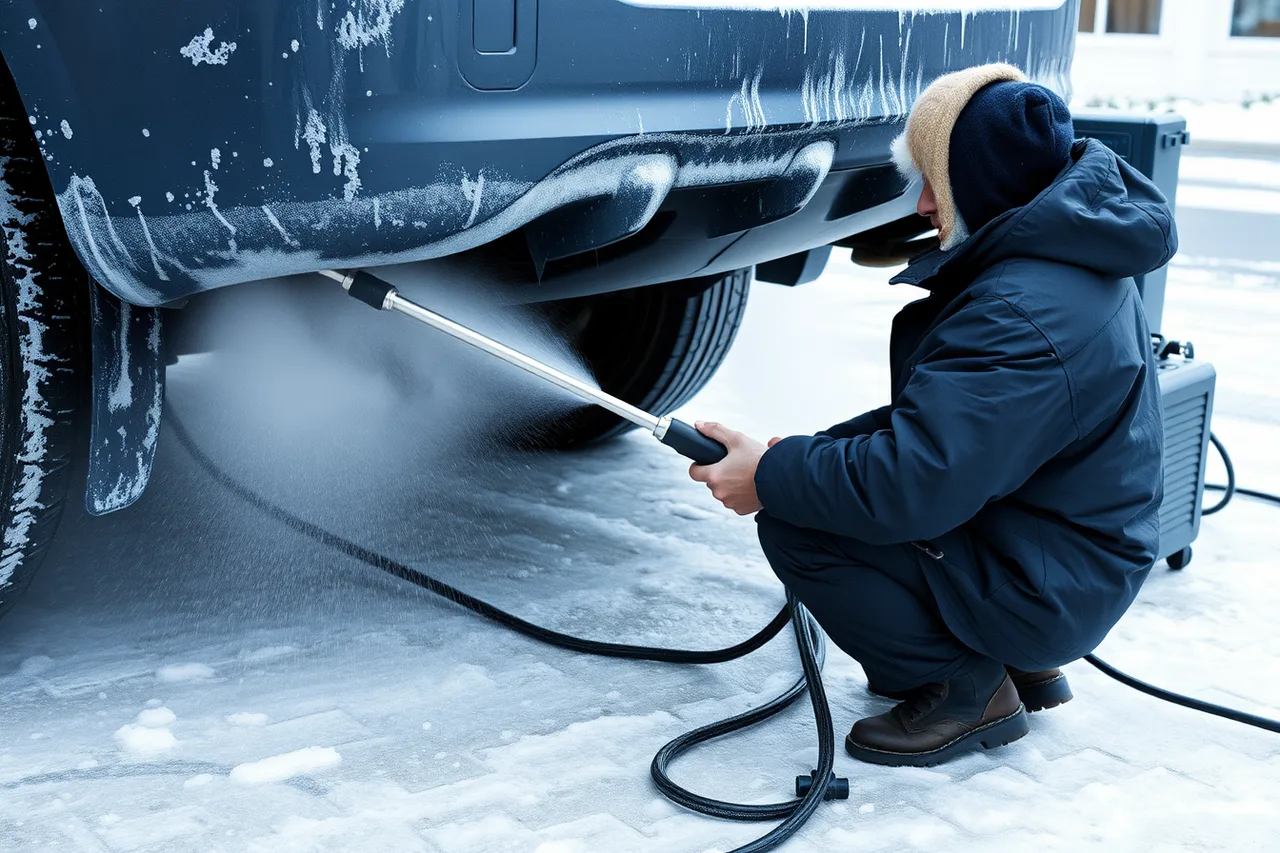
What holds up in the cold:
- Undercarriage rinse with heated water and a wand, working front to rear.
- Wheel well and rocker panel flush, where salt packs hardest.
- Hand-applied spray sealant or a cold-cure wax on painted panels.
- Glass treatment for slush spray and headlight film removal.
- Interior vacuum and wipe-down, no liquids that need heat to dry.
A detailer can also sell a mid-season re-rinse as a standalone visit. It is short, repeatable and easy to route. Packages of this shape fit the recurring model described in maintenance concepts, where value comes from frequency rather than depth.
The compromises worth making
Shortening the package is worth it. A 45-minute undercarriage and sealant visit at a fixed CAD price is easier to sell in February than a three-hour full detail nobody wants to book in a cold snap.
Working from a heated bay or a garage the customer provides is worth it. It restores the full menu and lets you charge for it. A detailer who can offer an indoor winter slot has a genuine differentiator in most Canadian cities.
Selling a rust prevention add-on is worth it, provided you are clear about what it does. A spray-on lanolin or wax-based product slows corrosion on sound metal. It does not reverse existing rust, and saying so protects you. The distinction between slowing and stopping is covered in general material on rustproofing.
Price the winter package in CAD with the seasonal inputs built in: heated water, waste capture, shorter days and travel between jobs. A summer price carried into January is a loss.
The compromises that are not worth it
Do not promise a full paint correction in an unheated space. Polish needs a temperature range to break down evenly, and cold panels give uneven results the customer will see in daylight.
Do not run wash water onto a frozen street or into a catch basin. Municipal storm sewer rules in Canada and the United States treat wash water as a discharge, and the general framework is set out in the EPA stormwater programme. A frozen gutter does not change that.
Do not book back-to-back winter jobs with no thaw time between them. Equipment freezes, hoses crack and you arrive at the second job with a dead pump.
Example
A Winnipeg detailer runs a C$89 undercarriage and sealant visit from November to March. A C$249 winter prep is for customers who book a heated bay.
The C$89 visit is the volume product. The C$249 visit is the margin product. Neither promises paint correction. Both are quoted in CAD, with GST added at Manitoba's rate, which the Canada Revenue Agency sets out by province.
When to stop and do it properly
Stop the winter workaround when the metal is already failing. Blistering under the paint, flaking seam sealer or a soft rocker panel means a rinse and sealant will not help.
That vehicle needs a body shop. A detailer who keeps selling rust prevention on it is selling a result that will not arrive.
The same applies to a customer who wants a show-car finish in February. The honest answer is to book them for April. A detailer who says that keeps the customer. One who takes the booking and delivers a hazy finish in a cold driveway loses them, and the referral that would have followed.
A second threshold is equipment. When your heated water source cannot hold temperature through a single job, the workaround has stopped working. At that point the choice is a heated van setup or a seasonal pause, and both are better than delivering cold work at full price.